JANUARY 2026 NEWSLETTER
Happy New Year! As we step into 2026, we're excited to welcome you to what promises to be an extraordinary year ahead. We hope the holidays treated you well and that you're ready to embrace the opportunities and adventures that await us in the months to come.
This year holds special significance for our nation. In 2026, the United States celebrates its 250th birthday—a remarkable milestone that invites us to reflect on our shared history, honor the progress we've made, and consider the legacy we want to build for future generations.
On July 4th, 1776, the Declaration of Independence proclaimed a bold vision of freedom and self-governance. Two hundred and fifty years later, we find ourselves at a unique moment to celebrate how far we've come as a nation while thoughtfully examining the work that still lies ahead. This semiquincentennial, or America's 250th anniversary, offers us a chance to engage with our history in meaningful ways—through community events, educational programs, and conversations about what it means to build a more perfect union.
Throughout 2026, communities across the country will commemorate this milestone with celebrations, commemorations, and service projects. We encourage you to participate in local events, learn something new about American history, or find ways to contribute to your community in honor of this significant anniversary.
As we embark on this historic year together, we're grateful for your continued membership and engagement. Here's to a year of growth, connection, and celebration.

Honoring Major General Samuel "Bo" Mahaney: A Legacy of Service and Leadership
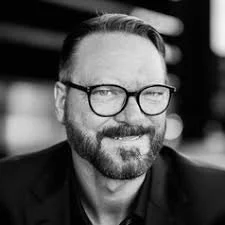
As Major General Samuel C. "Bo" Mahaney, USAF (Ret.), concludes his term as President of the Harvard Veterans Alumni Organization, we take this opportunity to celebrate his extraordinary contributions to our organization and to reflect on a remarkable career defined by service, scholarship, and leadership.
A Distinguished Military Career
General Mahaney's 36-year military career stands as a testament to dedication, courage, and excellence. A command pilot with more than 5,100 flying hours, he has piloted numerous combat missions in Afghanistan, Syria, Iraq, Somalia, and other locations around the world. His extensive flight experience spans multiple aircraft types, including the B-52, KC-10, C-5, C-9, KC-135, C-17, and C-40, demonstrating exceptional versatility and skill.
His final assignment as Chief of Staff at Air Mobility Command placed him at the helm of strategic operations affecting 107,000 Airmen worldwide. In this role, he led a team of 3,500 personnel, optimizing critical processes and overseeing vital airlift, aerial refueling, and mobility support missions that are essential to America's global military presence and humanitarian efforts.
General Mahaney's distinguished service has been recognized with numerous awards and decorations, including the Legion of Merit with oak leaf cluster, Meritorious Service Medal with two oak leaf clusters, Aerial Achievement Medal, Air Force Commendation Medal with oak leaf cluster, and Air Force Achievement Medal, among many others. These honors reflect not only his personal achievements but also his profound impact on the men and women he led throughout his career.
Scholar, Strategist, and Educator
What sets General Mahaney apart is his unique combination of operational expertise and intellectual depth. He was a National Security Fellow at Harvard University, where he engaged in rigorous policy analysis and strategic planning to address complex global security challenges. His academic credentials include a Bachelor of Arts in History from the Missouri University of Science and Technology, a Master of Public Administration from Troy University, and a Juris Doctor from St. Louis University School of Law.
As a licensed attorney in Illinois, General Mahaney brings a legal perspective to military and national security matters that few possess. His Georgetown Legislative Fellowship on Capitol Hill provided him with invaluable insight into the intersection of defense policy and governance. During this fellowship, he served on the staff of the Chairman of the House Appropriations Committee for Defense as a Military Legislative Assistant and Appropriations Liaison, directly influencing defense funding and policy decisions.
His commitment to education extends beyond his own learning. General Mahaney has taught Federal Appropriations Law at the Georgetown University Law Center, sharing his specialized knowledge with future lawyers and policymakers. He also attended the NATO School in Oberammergau, Germany, and completed the Capstone Military Leadership Program, continuously broadening his understanding of international security cooperation.
Continued Service
In retirement, General Mahaney has not slowed down. He currently serves as Director of the Missouri S&T Policy and Armed Forces Research and Development Institute, where he leverages his extensive experience in policy development and strategic leadership to foster innovative research aimed at enhancing U.S. national security and global stability. This work represents the cutting edge of defense research and development, preparing our nation for the security challenges of tomorrow.
As a lecturer of History, Constitutional Law, National Security, and Leadership at Missouri S&T, he shapes the minds of future leaders, instilling in them the values of service, integrity, and critical thinking. He also serves as a Missouri S&T Trustee, continuing his lifelong commitment to education and institutional excellence.
Leading the National Security Research Alliance
General Mahaney's commitment to national security continues to expand in new and innovative directions. He now serves as a key leader of the Council on Global Competition and Innovation's (CGCI) National Security Research Alliance (NSRA), a first-of-its-kind academic task force connecting leading faculty at elite universities directly to the challenge of mobilizing private capital for national security-relevant technologies.
The Alliance, chaired by Dr. Christos Makridis and comprising an extraordinary group of scholars and practitioners, seeks to strengthen America's long-term strategic advantage by aligning private capital with technologies that underpin our national and economic security. General Mahaney joins distinguished colleagues including Andrew Grotto (William J. Perry International Security Fellow at Stanford University), Karl Muth (Northwestern University), Mark Pascale (Director of The Intelligence Project at Harvard's Belfer Center), and Stephen Tankel (American University and Atlantic Council).
The Alliance's mission is to translate cutting-edge academic research into actionable frameworks that accelerate capital deployment in critical sectors—from AI and quantum computing to biotechnology and critical minerals. By creating an investable roadmap for aligning the full capital stack with U.S. national and economic security objectives, this initiative represents exactly the kind of innovative thinking that has characterized General Mahaney's approach to national security throughout his career.
The Alliance will produce recurring analysis leading up to a 2026 Integrated Report, offering a definitive guide for investors and policymakers to secure our technological future. General Mahaney's involvement in this groundbreaking initiative demonstrates his continued dedication to ensuring American security and prosperity through the strategic integration of academic excellence, private capital, and national security imperatives.
Commitment to Service Organizations
In September 2025, General Mahaney joined the Board of the Command Purpose Foundation, an organization dedicated to helping bridge the gap between military and civilian life through structured introspection, meaningful engagement, and a values-based community. When asked about his motivation for joining, he stated simply, "I am most excited to help the organization help others, and seek resources so CP can broaden its reach."
Leadership at HVAO
General Mahaney's presidency of the Harvard Veterans Alumni Organization has been marked by the same dedication and vision that characterized his military career. His leadership has strengthened our community, expanded our reach, and reinforced our commitment to supporting Harvard veterans across all branches of service and generations.
His approach to leadership embodies the values he holds dear. When asked about his dream dinner guest, he chose Harriet Tubman—the fearless abolitionist, conductor on the Underground Railroad, spy, scout, nurse, and Civil War hero. "She made around 13 missions to rescue approximately 70 enslaved people, including her family and friends, using the Underground Railroad," he explained. "She played a key role in the Combahee River Raid, where she helped free over 700 enslaved people, making her one of the first women to lead a military operation in U.S. history." His choice speaks to his appreciation for courage, selfless service, and transformative leadership.
A Lasting Impact
As General Mahaney transitions from his role as HVAO President, his impact on our organization will continue to be felt for years to come. He has exemplified the Harvard Veterans Alumni Organization's commitment to service, excellence, and community. His leadership has inspired us to reach higher, serve better, and remain connected to the values that unite us as veterans and as members of the Harvard community.
We extend our deepest gratitude to Major General Samuel "Bo" Mahaney for his exceptional service to HVAO and for his lifetime of dedication to our nation. His legacy of leadership, scholarship, and service will continue to inspire all of us who have had the privilege of working alongside him.
Thank you, General Mahaney, for your extraordinary leadership and unwavering commitment to our organization and our nation.
Important Update: New Election to Be Held
During post-election review for the Board of Directors election, our team identified concerns with the integrity of the voting process that prevent us from reliably validating the results. Specifically, we cannot confidently ensure that all votes were cast in accordance with our established rules, including the fundamental requirement that each member vote only once.
Given these circumstances, we have made the difficult but necessary decision to set aside the election results and conduct a new election.
What Happens Next
To ensure a fair, transparent, and secure process moving forward, we will be using a different voting platform that includes enhanced safeguards against duplicate or unauthorized voting. This new system will provide the security measures needed to protect the integrity of our democratic process.
We will share complete details about the new platform, election timeline, and voting procedures in the coming days. Our goal is to move forward efficiently while ensuring every member has confidence in the process and outcome.
Our Commitment to You
We recognize that this is a frustrating development, and we sincerely appreciate your patience and understanding as we take these necessary steps. The integrity of our election process is paramount, and we are committed to ensuring that all candidates and voters can have complete confidence in the results.
Why Board Composition and Election Integrity Matter for HVAO’s Future
The Harvard Veterans Alumni Organization exists for a clear and important purpose: to connect, elevate, and serve Harvard alumni who have worn the uniform. Our mission is not symbolic. It is practical. We are here to build community, raise awareness across the broader Harvard ecosystem, fund scholarships, support veteran causes, and ensure that those who have served are visible, supported, and represented within one of the world’s most influential academic networks.
To accomplish that mission, governance matters. Specifically, who serves on the board matters, and how those individuals are selected matters just as much.
A strong board must reflect the breadth of the membership it represents. Not in rank, not in title, but in lived experience. HVAO’s membership spans generations, services, industries, and sectors. It includes leaders from the private sector, nonprofit executives, entrepreneurs, academics, public servants, and veterans navigating every phase of post-service life. A board that mirrors this diversity is better equipped to understand member needs, make informed decisions, and guide the organization forward.
Too often, military pay grade is mistaken for universal leadership applicability. Admirals and generals have unquestionably led with distinction in uniform, and their experience is valuable. But nonprofit governance and private sector leadership demand additional and different competencies. Fundraising, fiduciary oversight, stakeholder engagement, organizational scaling, and external partnerships require hands-on experience in civilian institutions. Rank alone does not confer that expertise.
This is not a critique of military service. It is an acknowledgment of reality. Leadership is contextual. What works in a hierarchical command structure does not automatically translate to the governance of a nonprofit serving a diverse, civilian-connected membership. The most effective boards combine military credibility with nonprofit fluency and private sector execution. HVAO deserves nothing less.
Board diversity, in this sense, is not about optics. It is about effectiveness. It ensures that decisions are informed by those who understand donor engagement, scholarship administration, alumni relations, and long-term organizational sustainability. It ensures that the board serves the membership, rather than defining it narrowly.
Equally important is election integrity.
When members are invited to participate in governance through elections, those elections must be respected. Votes are not advisory suggestions. They are expressions of trust. Overriding or revisiting outcomes after the fact, particularly based on personal disagreement or internal politics, undermines confidence in the organization and discourages future engagement.
Trust is the currency of any membership organization. Once it erodes, it is difficult to rebuild. Members disengage. Volunteers step back. Momentum stalls. None of that serves HVAO’s mission.
Disagreement is healthy. Debate is healthy. Strong organizations allow for differing viewpoints and work through them transparently. What weakens an institution is the perception that established processes apply only when outcomes are convenient. Integrity means honoring the rules we set, even when we dislike the result.
At its core, this is about long-term stewardship.
Leadership is not about winning a moment. It is about staying present for the organization over time. Especially when doing so is uncomfortable. Especially when it requires restraint, humility, and respect for collective decision-making.
For HVAO, that means committing to support the organization, its mission, and its members beyond any single vote or disagreement. It means standing with the membership, honoring their participation, and working constructively within governance structures to improve them rather than bypass them.
If we get this right, HVAO becomes more than a network. It becomes a durable institution. One that honors service without being bound by hierarchy. One that values competence alongside experience. One that respects process over personality. And one that its members trust, support, and champion for decades to come. That is the standard worthy of the Harvard name. That is the organization our members deserve.
Shawn Whiteside, MPA Harvard Kennedy School, Class of 2019
Member, Harvard Veterans Alumni Organization
Book Review
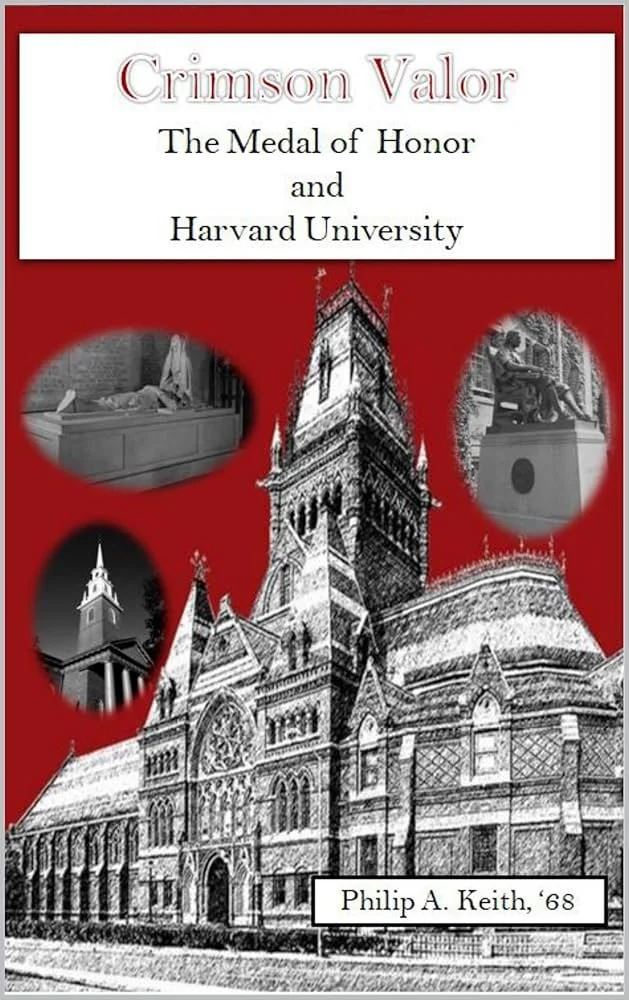
Crimson Valor
The medal of honor and harvard university
By Philip A. Keith
In 2011, Crimson Valor was published by Philip A. Keith, a U.S. military veteran and Harvard alumnus. The book brought renewed attention to a remarkable fact: Harvard University has produced more Medal of Honor recipients than any other university in the nation, outside of the U.S. military academies. At the time, Keith documented 17 Harvard alumni who had received the country’s highest military decoration for valor. Today, that number stands at 21.
Crimson Valor tells the stories behind that distinction, tracing the lives of Harvard alumni whose acts of courage span multiple conflicts and generations. Keith writes not only about battlefield heroism, but also about what followed—how many of these veterans returned from war to study, teach, lead, and continue serving in new ways.
Among those profiled are figures such as Colonel Theodore Roosevelt, whose service in the Spanish-American War preceded a lifetime of public leadership, and Colonel William J. Donovan, whose World War I valor was followed by a career that included founding the Office of Strategic Services during World War II, the precursor to today’s CIA.
More than a decade after its publication, and following Keith’s passing, Crimson Valor endures as a lasting contribution—preserving the stories of Harvard alumni whose service and sacrifice shaped the nation and affirming Harvard’s unique place in America’s military history.
Javier Jimenez, ALM ‘23
Air Force Veteran